

By Laura Garcia-Pupo, PhD November 6, 2026
“I decided not to give Depakine to my daughter anymore”. I froze when I heard her, but remained silent. She continued describing how her daughter’s health deteriorated after starting the anticonvulsant treatment. I never doubted my friend was a caring and responsible mother, so I kept listening. After several recurrent respiratory infections and a few cycles of antibiotics, her 6-year-old girl developed otitis media and a life-threatening pneumonia. Due to both professional and personal reasons, I was aware of the safety concerns regarding valproate.
A retrospective study found that 21% of 306 pediatric patients (mean age=9 years; range: 1-18 years) developed thrombocytopenia during valproate monotherapy or poly-therapy for multiple seizure types.
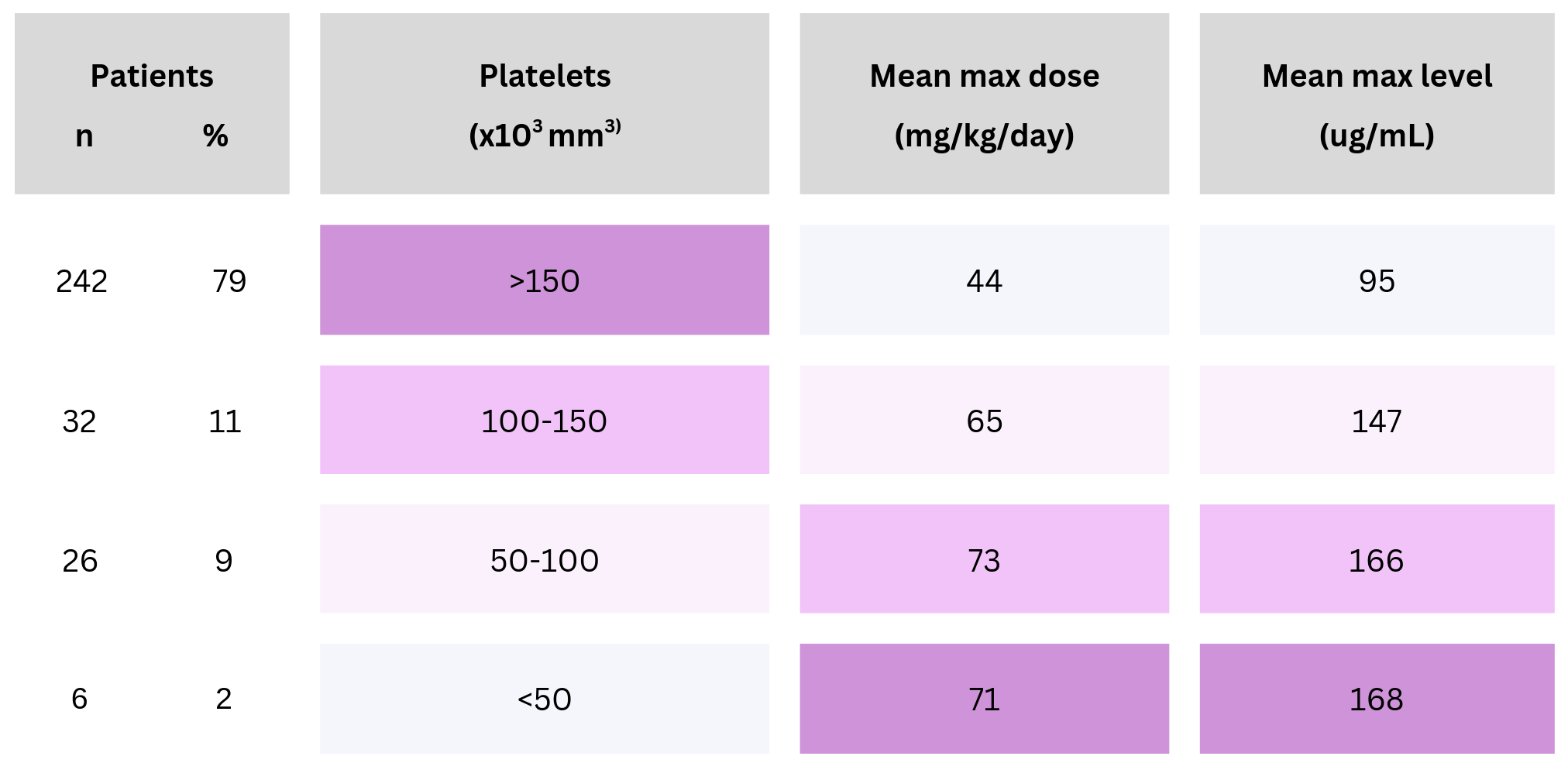
A subgroup analysis of patients with serum valproate levels higher than 140μg/mL, showed a higher incidence of thrombocytopenia (63% of patients). Among them, the mean time to develop this complication was approximately 8 months (range: 0.5-34 months). In all patients, the platelet count returned to normal levels upon reducing or discontinuing valproate dosage.
The NICE clinical practice guideline recommends sodium valproate, lamotrigine, or levetiracetam as first-line treatments for idiopathic generalised epilepsies. If the first choice of treatment is unsuccessful, the NICE guidelines also recommend trying another of these options as monotherapy or add-on treatment. If first-line treatments are unsuccessful for idiopathic generalised epilepsies, recommendations include perampanel or topiramate as second-line add-on treatment options. Carefully discussing the benefits and safety concerns of each treatment with patients and caregivers is another recommendation included in the NICE guidelines.
So, I gently asked my friend if she had considered discussing valproate toxicity and possible alternatives with their neurologist, as suddenly withdrawing anticonvulsants might cause higher rates and severity of seizures. My friend sighed before answering my question. She told me she had tried to raise her concerns. But each time, she felt her words were dismissed as overprotective anxiety or lost in the technical language that filled the room. She didn’t have the vocabulary to challenge the specialists, nor the confidence to insist on a deeper conversation. When her daughter’s health kept worsening, she felt cornered. Stopping the medication wasn’t a choice she made lightly; it was the only moment in the entire process where she felt she had any control left.

Image generated with Nano Banana (Gemini 3 Flash)
As she spoke, I could hear the mixture of fear, guilt, and determination in her voice. She wasn’t angry at the doctors. She was overwhelmed. She was scared. And she was navigating a system where the imbalance of knowledge, culture, and language had quietly widened the gap between her lived experience and the clinical decisions shaping her daughter’s life.
Later, when she finally returned to the neurology clinic, something unexpected happened. The new clinician didn’t begin with lab values or treatment algorithms. Instead, he asked her to tell the story in her own words, in the language she felt most comfortable with. He paused often to check understanding, invited questions without judgment, and acknowledged the emotional weight of what the family had endured. He explained the risks of abrupt withdrawal, but he also validated her observations and concerns. For the first time, she felt like a partner in her daughter’s care.

Image generated with Nano Banana (Gemini 3 Flash)
That conversation didn’t erase the past, but it changed the future. It rebuilt trust. It opened space for shared decisions. It reminded her that expertise and empathy are not competing forces, but complementary tools.
And it left me with a quiet conviction: communication is not a soft skill in medicine. It is a clinical skill. It is a safety measure. It is a bridge across differences in knowledge, culture, and language. When that bridge is strong, families feel empowered. When it cracks, even the best treatments can fail.
Her story is not an accusation. It is an invitation for healthcare practitioners to slow down, to listen with intention, to translate without condescension, and to recognize that every caregiver brings irreplaceable insight into the room. When we meet them halfway, outcomes improve. Trust deepens. And children like her daughter receive not only the right treatment, but the right partnership to support it.